
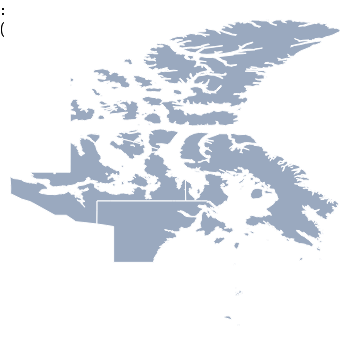
Canada
94 أخرى
- الأكواد القياسية
- ISO ألفا 2CA
- ISO ألفا 3CAN
- رقم ISO124
- UN M.49124
- جيو نيمز6251999
- 37,058,856المجتمع60.1087, -113.6426Independent political entity
الوصف
أسماء بديلة
- hyw
- Գանատա, Քանատա
- olo
- Kanuadu
- الأذربيجانية
- Kanada
- الأرمنية
- Կանադա
المناطق الفرعية


مشروع بيانات
This election study survey is based upon questions asked in the Canadian Election Study, but tailored for the Saskatchewan context. It was conducted by the Consortium on Electoral Democracy (C-Dem).

مشروع بيانات
The 2011 Canadian Election Study consists of 4 waves. Note that each survey wave is a different questionnaire: CPS is the Campaign Period Survey (by telephone), PES is the Post-Election Survey (by telephone), MBS is the Mailback Survey, and WEB is the final Web-based survey.
.jpg)
مشروع بيانات
The main objective of the Canadian Tobacco and Nicotine Survey is to gather information about the prevalence of cigarette smoking, vaping, and cannabis use. Until 2017, Statistics Canada conducted the Canadian Tobacco, Alcohol and Drugs Survey (CTADS), which collected data on tobacco as well as alcohol and drug use in Canada. In 2019, the Canadian Alcohol and Drugs Survey (CADS) was conducted to collect data on alcohol and drug use independently from the Canadian Tobacco and Nicotine Survey (CTNS), which was conducted primarily to collect data on tobacco and nicotine use.
.jpg)
مشروع بيانات
The main objective of the Canadian Tobacco and Nicotine Survey is to gather information about the prevalence of cigarette smoking, vaping, and cannabis use. Until 2017, Statistics Canada conducted the Canadian Tobacco, Alcohol and Drugs Survey (CTADS), which collected data on tobacco as well as alcohol and drug use in Canada. In 2019, the Canadian Alcohol and Drugs Survey (CADS) was conducted to collect data on alcohol and drug use independently from the Canadian Tobacco and Nicotine Survey (CTNS), which was conducted primarily to collect data on tobacco and nicotine use.
مشروع بيانات
C-Dem is a dynamic research network across Canada that addresses urgent questions about political engagement, underrepresentation, levels of government, the evolution of public opinion between and across elections, and data collection practices with an evidence-based, cooperative approach to studying electoral democracy, during federal elections as well as subnationally and between elections.
مشروع بيانات
The Labour Force Survey (LFS) is a monthly survey of Canadian households carried out by Statistics Canada. It was developed after the Second World War to satisfy a need for reliable and timely data on the labour market due to the massive labour market changes involved in the transition from a war to peace-time economy. The objectives of the LFS have been to divide the working-age population into three mutually exclusive labour force status categories (employed, unemployed, and not in the labour force) and to provide descriptive and explanatory data on each of these groups. With the release of the survey results only 10 days after the completion of data collection, the LFS estimates are the first of the major monthly economic data series to be released. The LFS is the source of Canada's official unemployment rates, including the rates used by Employment and Social Development Canada in the calculation of Employment Insurance (EI) eligibility and benefit criteria. Data from the survey also provide information on major labour market trends, such as shifts in employment across industrial sectors, hours worked and labour force participation.

مشروع بيانات
The Labour Force Survey (LFS) is a monthly survey of Canadian households carried out by Statistics Canada. It was developed after the Second World War to satisfy a need for reliable and timely data on the labour market due to the massive labour market changes involved in the transition from a war to peace-time economy. The objectives of the LFS have been to divide the working-age population into three mutually exclusive labour force status categories (employed, unemployed, and not in the labour force) and to provide descriptive and explanatory data on each of these groups. With the release of the survey results only 10 days after the completion of data collection, the LFS estimates are the first of the major monthly economic data series to be released. The LFS is the source of Canada's official unemployment rates, including the rates used by Employment and Social Development Canada in the calculation of Employment Insurance (EI) eligibility and benefit criteria. Data from the survey also provide information on major labour market trends, such as shifts in employment across industrial sectors, hours worked and labour force participation.
مشروع بيانات
The Canadian Perspectives Survey Series (CPSS) is a set of short, online surveys beginning in March 2020 that will be used to collect information on the knowledge and behaviours of residents of the 10 Canadian provinces. All surveys in the series will be asked of Statistics Canada's probability panel. The probability panel for the CPSS is a new pilot project initiated in 2019. An important goal of the CPSS is to directly collect data from Canadians in a timely manner in order to inform policy makers and be responsive to emerging data needs. The CPSS is designed to produce data at a national level (excluding the territories).
The PISA for Development programme aims to encourage and facilitate PISA participation by interested and motivated low- and middle-income countries. From this page you can download the PISA for Development dataset with the full set of responses from: In-school assessment: individual students, school principals and teachers Out-of-school assessment: individual respondents, parents/guardians of respondents and interviewer household observations These files will be of use to statisticians and professional researchers who would like to undertake their own analysis of the PISA for Development data. The files available on this page include questionnaires, codebooks, data files in SAS™ and SPSS™ formats, database compendia and tables including system-level data and descriptive analyses that were created to support the reporting of PISA for Development results by participating countries. The main data files for each assessment relate to: In-school assessment: student questionnaire (which also includes estimates of student performance), school questionnaire, teacher questionnaire and cognitive items Out-of-school assessment: respondent questionnaires (including youth, parent/guardian and household observation questionnaires, as well as estimates of respondent performance), cognitive items and questionnaire timing These files include data for participating countries: In-school assessment: Cambodia, Ecuador, Guatemala, Honduras, Paraguay, Senegal and Zambia Out-of-school assessment: Guatemala, Honduras, Panama, Paraguay and Senegal
The PISA for Development programme aims to encourage and facilitate PISA participation by interested and motivated low- and middle-income countries. From this page you can download the PISA for Development dataset with the full set of responses from: In-school assessment: individual students, school principals and teachers Out-of-school assessment: individual respondents, parents/guardians of respondents and interviewer household observations These files will be of use to statisticians and professional researchers who would like to undertake their own analysis of the PISA for Development data. The files available on this page include questionnaires, codebooks, data files in SAS™ and SPSS™ formats, database compendia and tables including system-level data and descriptive analyses that were created to support the reporting of PISA for Development results by participating countries. The main data files for each assessment relate to: In-school assessment: student questionnaire (which also includes estimates of student performance), school questionnaire, teacher questionnaire and cognitive items Out-of-school assessment: respondent questionnaires (including youth, parent/guardian and household observation questionnaires, as well as estimates of respondent performance), cognitive items and questionnaire timing These files include data for participating countries: In-school assessment: Cambodia, Ecuador, Guatemala, Honduras, Paraguay, Senegal and Zambia Out-of-school assessment: Guatemala, Honduras, Panama, Paraguay and Senegal