
My data profiles

The Australian Government and the state and territory governments provided the funding for the Australian component of PISA 2015. All of Australia’s share of the international overheads and half of the basic funding for PISA within Australia was contributed by the Australian Government Department of Education and Training, while each state and territory government education department provided funding in proportion to the numbers of 15-year-old students enrolled in their schools. In Australia, PISA is guided by the International Assessments Joint National Advisory Committee (IAJNAC). ACER wishes to thank the IAJNAC members for their interest and commitment throughout every phase of the project. Their involvement included reviewing the frameworks and assessment items, assisting with the implementation of PISA in schools from their state or territory, and providing valuable information to ensure the success of PISA 2015 in Australia. The undertaking of PISA 2015 was a collaborative effort. A national assessment such as PISA could not be successful without the cooperation of school systems, principals, teachers, students and parents. A high participation rate of the randomly selected schools and students is essential for obtaining high-quality data. It is thanks to this level of cooperation that Australia was able to fully satisfy the internationally set response criteria for PISA 2015. ACER gratefully acknowledges the assistance of education system officials Australia-wide, and the principals, teachers and students in the participating schools who so generously gave their time and support to the project.

Malaria remains a substantial global health challenge, causing preventable illnesses and fatalities. In Nepal, the government has ambitiously targeted achieving malaria-free status by 2025. This study aims to assess the impact of women’s roles on health-seeking behavior during suspected malaria fever in the high-risk area of Kanchanpur district, Nepal. This is a cross-sectional analytical design with a mixed-method approach, the research focused on Kanchanpur district, selected from 20 high-risk malaria districts of Nepal. Belauri Municipality within Kanchanpur, identified for its concentration of high and moderate-risk wards, was the specific study area. A random selection process identified 387 households for a comprehensive survey. Face-to-face interviews with household heads were conducted after obtaining written informed consent and ethical approval from the Nepal Health Research Council (March 3, 2023/Ref no.-2041). Data analysis, employing statistical measures such as percentages, frequency, mean, and the Chi-square test, was performed using SPSS version 20. Cultural beliefs regarding women’s use of bed nets during menstruation significantly predicted health-seeking behavior (p-value < 0.05). Those endorsing bed net use during menstruation were nearly twice as likely to choose modern health facilities (COR = 1.975, 95% C.I. = 1.134 to 3.439, p = 0.016). Women’s involvement in malaria treatment decisions strongly correlated with health-seeking behavior (p-value = 0.001). However, women participating in household decisions for suspected malaria treatment were less likely to choose modern health facilities (COR = 0.327, 95% CI = 0.171–0.627, p = 0.001) compared to those without such a role. The study underscores the complex influence of cultural beliefs and women’s decision-making roles on health-seeking behavior. Recognizing and comprehending these factors are vital for crafting effective malaria interventions that align with cultural contexts and consider the nuanced roles of women in health-related decisions.
.jpg)
The main purpose of this survey is to study the coverage of the employment insurance program. It provides a meaningful picture of who does or does not have access to EI benefits among the jobless and those in a situation of underemployment. The Employment Insurance Coverage Survey also covers access to maternity and parental benefits. The survey was designed to produce a series of precise measures to identify groups with low probability of receiving benefits, for instance, the long-term jobless, labour market entrants and students, people becoming unemployed after uninsured employment, people who have left jobs voluntarily and individuals who are eligible, given their employment history, but do not claim or otherwise receive benefits. The survey provides a detailed description of the characteristics of the last job held as well as reasons for not receiving benefits or for not claiming. Through the survey data, analysts will also be able to observe the characteristics and situation of people not covered by EI and of those who exhausted EI benefits, the job search intensity of the unemployed, expectation of recall to a job, and alternate sources of income and funds. Survey data pertaining to maternity and parental benefits answer questions on the proportion of mothers of an infant who received maternity and parental benefits, the reason why some mothers do not receive benefits and about sharing parental benefits with their spouse. The survey also allows looking at the timing and circumstances related to the return to work, the income adequacy of households with young children and more.
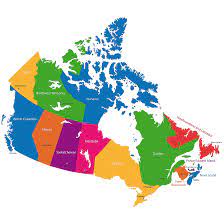
The Provincial Diversity Project is a survey aimed at comparing public opinions realities across provinces on identity and attachment, views about federalism, attitudes toward ethnic diversity and immigration, as well as views on social, economic and political issues.
The survey was carried out by CRRC Georgia within the framework of UN Women project “Teachers Taking Stance on Violence against Women and Domestic Violence in Georgia” generously funded by the Government of Denmark. The content of this survey does not reflect the official opinion of UN Women or the Danish Government. Responsibility for the information and views expressed therein lies entirely with the author(s). Please note that differences displayed in cross-tabulations may not be statistically significant. Numbers may vary from the report due to different statistical analysis processes.
The 2021 Canadian Election Study (CES) was conducted to document the attitudes of Canadians during and after the 2021 election. It continues the tradition of Canadian Election Studies started in 1965.
In late May and early June of 2013, CRRC Georgia conducted a small survey among Georgian-speaking adult residents of Tbilisi regarding the events of May 17th, during which two demonstrations – one for the International Day Against Homophobia and another against homosexuality — ended with the participants of the latter violently overwhelming the participants of the former. For the first time in CRRC’s history, face-to-face interviews were conducted using computer tablets instead of paper questionnaires, resulting in 542 completed interviews through computer-assisted personal interviewing (CAPI).
The principal goal of this study is to chart Georgians’ attitudes towards minimum wage and assess perceptions of a decent value for a minimum wage. The study was funded by the Friedrich Ebert Foundation in Georgia and administered as a part of CRRC-Georgia's quarterly omnibus survey
.jpg)
The main purpose of this survey is to study the coverage of the employment insurance program. It provides a meaningful picture of who does or does not have access to EI benefits among the jobless and those in a situation of underemployment. The Employment Insurance Coverage Survey also covers access to maternity and parental benefits. The survey was designed to produce a series of precise measures to identify groups with low probability of receiving benefits, for instance, the long-term jobless, labour market entrants and students, people becoming unemployed after uninsured employment, people who have left jobs voluntarily and individuals who are eligible, given their employment history, but do not claim or otherwise receive benefits. The survey provides a detailed description of the characteristics of the last job held as well as reasons for not receiving benefits or for not claiming. Through the survey data, analysts will also be able to observe the characteristics and situation of people not covered by EI and of those who exhausted EI benefits, the job search intensity of the unemployed, expectation of recall to a job, and alternate sources of income and funds. Survey data pertaining to maternity and parental benefits answer questions on the proportion of mothers of an infant who received maternity and parental benefits, the reason why some mothers do not receive benefits and about sharing parental benefits with their spouse. The survey also allows looking at the timing and circumstances related to the return to work, the income adequacy of households with young children and more.
The Covid-19 crisis has had wide ranging implications and impacts for the world. These range from how economies work (or don’t) to how people socialize. As a result of the crisis, policy makers had to make a wide range of decisions on closing down businesses to imposing restrictions on the freedom of movement. In support of enabling informed decision making, CRRC Georgia conducted six waves of data collection between late April and early June, with the financial support of the Embassy of the Kingdom of the Netherlands in Tbilisi.