13 provinces · 94 other
Description
Subregions

Data project
The Labour Force Survey (LFS) is a monthly survey of Canadian households carried out by Statistics Canada. It was developed after the Second World War to satisfy a need for reliable and timely data on the labour market due to the massive labour market changes involved in the transition from a war to peace-time economy. The objectives of the LFS have been to divide the working-age population into three mutually exclusive labour force status categories (employed, unemployed, and not in the labour force) and to provide descriptive and explanatory data on each of these groups. With the release of the survey results only 10 days after the completion of data collection, the LFS estimates are the first of the major monthly economic data series to be released. The LFS is the source of Canada's official unemployment rates, including the rates used by Employment and Social Development Canada in the calculation of Employment Insurance (EI) eligibility and benefit criteria. Data from the survey also provide information on major labour market trends, such as shifts in employment across industrial sectors, hours worked and labour force participation.

Data project
The Labour Force Survey (LFS) is a monthly survey of Canadian households carried out by Statistics Canada. It was developed after the Second World War to satisfy a need for reliable and timely data on the labour market due to the massive labour market changes involved in the transition from a war to peace-time economy. The objectives of the LFS have been to divide the working-age population into three mutually exclusive labour force status categories (employed, unemployed, and not in the labour force) and to provide descriptive and explanatory data on each of these groups. With the release of the survey results only 10 days after the completion of data collection, the LFS estimates are the first of the major monthly economic data series to be released. The LFS is the source of Canada's official unemployment rates, including the rates used by Employment and Social Development Canada in the calculation of Employment Insurance (EI) eligibility and benefit criteria. Data from the survey also provide information on major labour market trends, such as shifts in employment across industrial sectors, hours worked and labour force participation.

Data project
The Labour Force Survey (LFS) is a monthly survey of Canadian households carried out by Statistics Canada. It was developed after the Second World War to satisfy a need for reliable and timely data on the labour market due to the massive labour market changes involved in the transition from a war to peace-time economy. The objectives of the LFS have been to divide the working-age population into three mutually exclusive labour force status categories (employed, unemployed, and not in the labour force) and to provide descriptive and explanatory data on each of these groups. With the release of the survey results only 10 days after the completion of data collection, the LFS estimates are the first of the major monthly economic data series to be released. The LFS is the source of Canada's official unemployment rates, including the rates used by Employment and Social Development Canada in the calculation of Employment Insurance (EI) eligibility and benefit criteria. Data from the survey also provide information on major labour market trends, such as shifts in employment across industrial sectors, hours worked and labour force participation.

Data project
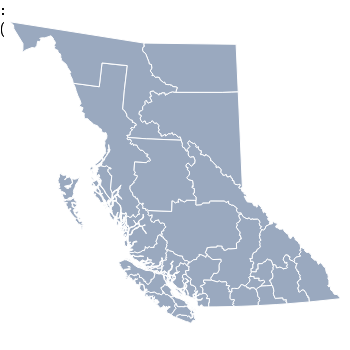
A study was conducted by Health Canada to survey the general public, including non-smokers and smokers, in the provinces of Newfoundland and Labrador, and British Columbia. The survey was conducted to measure knowledge, attitudes, and behaviours of the population, both smokers and non-smokers, to serve as a baseline against which to measure and evaluate the impact of the smoking bans. A total of 1,468 adults, including 800 smokers, were surveyed in British Columbia on attitudes toward second-hand smoke and smoking in public places, during the same timeframe, also using a random-digit dial sampling process and trained, bilingual interviewers to administer the questionnaire. The margin of error for samples of this size is also plus or minus 2.6 percentage points, 19 times in 20 for the overall sample and plus or minus 3.5 per cent for smokers. The questionnaire was largely replicated from previous iterations with other provinces, although some items were changed based on the needs and laws in each province.

Data project
A study was conducted by Health Canada to survey the general public, including non-smokers and smokers, in the provinces of Newfoundland and Labrador, and British Columbia. The survey was conducted to measure knowledge, attitudes, and behaviours of the population, both smokers and non-smokers, to serve as a baseline against which to measure and evaluate the impact of the smoking bans. A total of 1,468 adults, including 800 smokers, were surveyed in British Columbia on attitudes toward second-hand smoke and smoking in public places, during the same timeframe, also using a random-digit dial sampling process and trained, bilingual interviewers to administer the questionnaire. The margin of error for samples of this size is also plus or minus 2.6 percentage points, 19 times in 20 for the overall sample and plus or minus 3.5 per cent for smokers. The questionnaire was largely replicated from previous iterations with other provinces, although some items were changed based on the needs and laws in each province.
The PISA for Development programme aims to encourage and facilitate PISA participation by interested and motivated low- and middle-income countries. From this page you can download the PISA for Development dataset with the full set of responses from: In-school assessment: individual students, school principals and teachers Out-of-school assessment: individual respondents, parents/guardians of respondents and interviewer household observations These files will be of use to statisticians and professional researchers who would like to undertake their own analysis of the PISA for Development data. The files available on this page include questionnaires, codebooks, data files in SAS™ and SPSS™ formats, database compendia and tables including system-level data and descriptive analyses that were created to support the reporting of PISA for Development results by participating countries. The main data files for each assessment relate to: In-school assessment: student questionnaire (which also includes estimates of student performance), school questionnaire, teacher questionnaire and cognitive items Out-of-school assessment: respondent questionnaires (including youth, parent/guardian and household observation questionnaires, as well as estimates of respondent performance), cognitive items and questionnaire timing These files include data for participating countries: In-school assessment: Cambodia, Ecuador, Guatemala, Honduras, Paraguay, Senegal and Zambia Out-of-school assessment: Guatemala, Honduras, Panama, Paraguay and Senegal

Data project
The Labour Force Survey (LFS) is a monthly survey of Canadian households carried out by Statistics Canada. It was developed after the Second World War to satisfy a need for reliable and timely data on the labour market due to the massive labour market changes involved in the transition from a war to peace-time economy. The objectives of the LFS have been to divide the working-age population into three mutually exclusive labour force status categories (employed, unemployed, and not in the labour force) and to provide descriptive and explanatory data on each of these groups. With the release of the survey results only 10 days after the completion of data collection, the LFS estimates are the first of the major monthly economic data series to be released. The LFS is the source of Canada's official unemployment rates, including the rates used by Employment and Social Development Canada in the calculation of Employment Insurance (EI) eligibility and benefit criteria. Data from the survey also provide information on major labour market trends, such as shifts in employment across industrial sectors, hours worked and labour force participation. The LFS also provides employment estimates by industry, occupation, public and private sector, hours worked and much more, all cross-classifiable by a variety of demographic characteristics. Estimates are produced for Canada, the provinces, the territories and a large number of sub-provincial regions. For employees, data on wage rates, union status, job permanency and establishment size are also produced.

Data project
The Labour Force Survey (LFS) is a monthly survey of Canadian households carried out by Statistics Canada. It was developed after the Second World War to satisfy a need for reliable and timely data on the labour market due to the massive labour market changes involved in the transition from a war to peace-time economy. The objectives of the LFS have been to divide the working-age population into three mutually exclusive labour force status categories (employed, unemployed, and not in the labour force) and to provide descriptive and explanatory data on each of these groups. With the release of the survey results only 10 days after the completion of data collection, the LFS estimates are the first of the major monthly economic data series to be released. The LFS is the source of Canada's official unemployment rates, including the rates used by Employment and Social Development Canada in the calculation of Employment Insurance (EI) eligibility and benefit criteria. Data from the survey also provide information on major labour market trends, such as shifts in employment across industrial sectors, hours worked and labour force participation. The LFS also provides employment estimates by industry, occupation, public and private sector, hours worked and much more, all cross-classifiable by a variety of demographic characteristics. Estimates are produced for Canada, the provinces, the territories and a large number of sub-provincial regions. For employees, data on wage rates, union status, job permanency and establishment size are also produced.

Data project
The Labour Force Survey (LFS) is a monthly survey of Canadian households carried out by Statistics Canada. It was developed after the Second World War to satisfy a need for reliable and timely data on the labour market due to the massive labour market changes involved in the transition from a war to peace-time economy. The objectives of the LFS have been to divide the working-age population into three mutually exclusive labour force status categories (employed, unemployed, and not in the labour force) and to provide descriptive and explanatory data on each of these groups. With the release of the survey results only 10 days after the completion of data collection, the LFS estimates are the first of the major monthly economic data series to be released. The LFS is the source of Canada's official unemployment rates, including the rates used by Employment and Social Development Canada in the calculation of Employment Insurance (EI) eligibility and benefit criteria. Data from the survey also provide information on major labour market trends, such as shifts in employment across industrial sectors, hours worked and labour force participation. The LFS also provides employment estimates by industry, occupation, public and private sector, hours worked and much more, all cross-classifiable by a variety of demographic characteristics. Estimates are produced for Canada, the provinces, the territories and a large number of sub-provincial regions. For employees, data on wage rates, union status, job permanency and establishment size are also produced.

Data project
The Labour Force Survey (LFS) is a monthly survey of Canadian households carried out by Statistics Canada. It was developed after the Second World War to satisfy a need for reliable and timely data on the labour market due to the massive labour market changes involved in the transition from a war to peace-time economy. The objectives of the LFS have been to divide the working-age population into three mutually exclusive labour force status categories (employed, unemployed, and not in the labour force) and to provide descriptive and explanatory data on each of these groups. With the release of the survey results only 10 days after the completion of data collection, the LFS estimates are the first of the major monthly economic data series to be released. The LFS is the source of Canada's official unemployment rates, including the rates used by Employment and Social Development Canada in the calculation of Employment Insurance (EI) eligibility and benefit criteria. Data from the survey also provide information on major labour market trends, such as shifts in employment across industrial sectors, hours worked and labour force participation. The LFS also provides employment estimates by industry, occupation, public and private sector, hours worked and much more, all cross-classifiable by a variety of demographic characteristics. Estimates are produced for Canada, the provinces, the territories and a large number of sub-provincial regions. For employees, data on wage rates, union status, job permanency and establishment size are also produced.