1 شهرها · 3 سایر
توضیحات
زیرمنطقهها
دادهها در VoxDash
فرد
سمت:British political scientist and professor
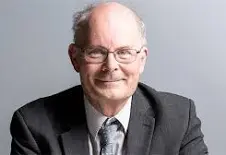
From 1981 to 1983 Curtice was a research fellow at Nuffield College, Oxford.[10][1][11] Curtice was appointed as a lecturer at the University of Liverpool from 1983 to 1988, then a lecturer and senior lecturer at the University of Strathclyde from 1988 to 1997[1] before being promoted to Professor in 1998. Curtice serves as president of the British Polling Council, vice-chair of the Economic and Social Data Service's Advisory Committee and is a member of the editorial board of the Journal of Elections, the Executive Committee of the British Politics Section of the American Political Science Association, and the Policy Advisory Committee of the Institute for Public Policy Research.[3] He was formerly a Fellow at the Netherlands Institute for Advanced Study and a member of the steering committee of the Comparative Study of Electoral Systems project. Curtice has frequently appeared on BBC News during broadcast coverage of general elections in the United Kingdom, giving his predictions of the results in 2005, 2010, 2015 and 2017.[12] With David Firth he developed the methodology used in the exit poll estimation used in the general election coverage.[13] He has picked up a strong following on social media, and was mentioned frequently on Twitter during the 2017 election, though he shuns this attention, adding "I've no wish to become a media celebrity".
فرد
I have been a part of Oxford sociology for the last half-century, coming to Oxford in 1970 as a University Lecturer in Sociology. Over the following fifty years my research has ranged widely over many areas, from rational choice theory to electoral behaviour. Most of my research has been based on sample surveys, and I was a very junior member of the team that conducted the landmark 1972 social mobility survey (led by John Goldthorpe and Chelly Halsey at Nuffield College). Subsequently I directed the British Election Surveys of 1983, 1987, 1992 and 1997 (with Roger Jowell and John Curtice) and more recently the 2010 Ethnic Minority British Election Survey (with Steve Fisher, David Sanders, Maria Sobolewska and Gemma Rosenblatt). I have also broadened my range to include field experiments designed to test whether racial discrimination continues to occur in the British labour market. (It does.) I have also worked with various national and international bodies such as UNDP (on social cohesion and trust in Bosnia) and OECD (on the integration of ethnic minorities). Currently I am leading a project for the Social Mobility Commission designing a new measurement framework in order to monitor trends in social mobility and to evaluate the effectiveness of government policy. I am also a member of a task force (for the Office For National Statistics) aimed to improve the collection of equalities data across government and to ensure that ‘everyone counts, and is counted, and no one is forgotten’.

فرد
سمت:Director
فرد
سمت:Lecturer in Public Policy
فرد
سمت:Professor
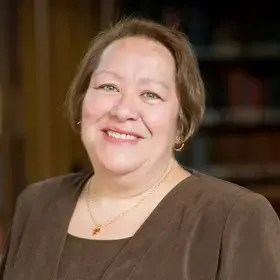
Daisy L. Machado serves as Professor of Church History. Her scholarship focuses specifically on United States Christianities. She is the first U.S. Latina ordained in the Christian Church (Disciples of Christ) in 1981 in the Northeast Region and has served inner city congregations in Brooklyn, Houston, and Fort Worth.
فرد
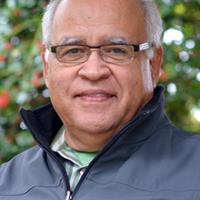
Caleb Rosado is Associate Dean of Arts & Sciences at Odessa College, in Odessa, TX. He holds a doctorate in sociology from Northwestern University, a Master’s in New Testament Studies from Andrews University, and a Bachelors in Theology from Pacific Union College. He has taught in diverse academic settings in the United States, the UK, and in Latin America. These venues include: community colleges; small to midsize private colleges and universities; and large state universities. He has served as department chair in two schools, and as director of a branch campus in Chicago. His areas of expertise in sociology are: Race Relations, Theory, Urban, Religion, Latina/o Studies, and Wisdom/Ethics. Dr. Rosado has also been a human systems consultant since 1978. He has worked on issues of human relations and human systems change with government agencies; universities; K-12 school districts; corporations; churches; and community organizations. He has studied religion and social change in revolutionary Cuba, refugee life in internment camps in Thailand, street life in England, and cultural life in Spain. He has written three books and numerous professional articles. His latest publication, in his current area of research focus (quantum physics and urban transformation), is titled “Context Determines Content: Quantum Physics as a Framework for “Wholeness” in Urban Transformation.” Published in the September 2008 issue of the Urban Studies Journal. Prior to coming to Odessa College, Caleb taught full-time at Warner Pacific College heading up the Urban Studies Program, and part-time at Chemeketa Community College in Woodburn, OR, teaching Sociology and Chicano Studies.