13 استانها · 94 سایر
توضیحات
زیرمنطقهها

پروژه داده
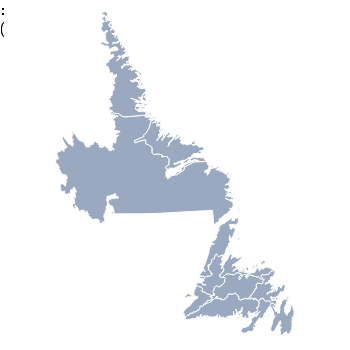
This election study survey is based upon questions asked in the Canadian Election Study, but tailored for the Newfoundland and Labrador context. It was conducted by the Consortium on Electoral Democracy (C-Dem).
.jpg)
پروژه داده
The main purpose of this survey is to study the coverage of the employment insurance program. It provides a meaningful picture of who does or does not have access to EI benefits among the jobless and those in a situation of underemployment. The Employment Insurance Coverage Survey also covers access to maternity and parental benefits. The survey was designed to produce a series of precise measures to identify groups with low probability of receiving benefits, for instance, the long-term jobless, labour market entrants and students, people becoming unemployed after uninsured employment, people who have left jobs voluntarily and individuals who are eligible, given their employment history, but do not claim or otherwise receive benefits. The survey provides a detailed description of the characteristics of the last job held as well as reasons for not receiving benefits or for not claiming. Through the survey data, analysts will also be able to observe the characteristics and situation of people not covered by EI and of those who exhausted EI benefits, the job search intensity of the unemployed, expectation of recall to a job, and alternate sources of income and funds. Survey data pertaining to maternity and parental benefits answer questions on the proportion of mothers of an infant who received maternity and parental benefits, the reason why some mothers do not receive benefits and about sharing parental benefits with their spouse. The survey also allows looking at the timing and circumstances related to the return to work, the income adequacy of households with young children and more.
.jpg)
پروژه داده
The main purpose of this survey is to study the coverage of the employment insurance program. It provides a meaningful picture of who does or does not have access to EI benefits among the jobless and those in a situation of underemployment. The Employment Insurance Coverage Survey also covers access to maternity and parental benefits. The survey was designed to produce a series of precise measures to identify groups with low probability of receiving benefits, for instance, the long-term jobless, labour market entrants and students, people becoming unemployed after uninsured employment, people who have left jobs voluntarily and individuals who are eligible, given their employment history, but do not claim or otherwise receive benefits. The survey provides a detailed description of the characteristics of the last job held as well as reasons for not receiving benefits or for not claiming. Through the survey data, analysts will also be able to observe the characteristics and situation of people not covered by EI and of those who exhausted EI benefits, the job search intensity of the unemployed, expectation of recall to a job, and alternate sources of income and funds. Survey data pertaining to maternity and parental benefits answer questions on the proportion of mothers of an infant who received maternity and parental benefits, the reason why some mothers do not receive benefits and about sharing parental benefits with their spouse. The survey also allows looking at the timing and circumstances related to the return to work, the income adequacy of households with young children and more.
پروژه داده
The Provincial Diversity Project is a survey aimed at comparing public opinions realities across provinces on identity and attachment, views about federalism, attitudes toward ethnic diversity and immigration, as well as views on social, economic and political issues.

پروژه داده
The 2021 Canadian Election Study (CES) was conducted to document the attitudes of Canadians during and after the 2021 election. It continues the tradition of Canadian Election Studies started in 1965.
.jpg)
پروژه داده
The main purpose of this survey is to study the coverage of the employment insurance program. It provides a meaningful picture of who does or does not have access to EI benefits among the jobless and those in a situation of underemployment. The Employment Insurance Coverage Survey also covers access to maternity and parental benefits. The survey was designed to produce a series of precise measures to identify groups with low probability of receiving benefits, for instance, the long-term jobless, labour market entrants and students, people becoming unemployed after uninsured employment, people who have left jobs voluntarily and individuals who are eligible, given their employment history, but do not claim or otherwise receive benefits. The survey provides a detailed description of the characteristics of the last job held as well as reasons for not receiving benefits or for not claiming. Through the survey data, analysts will also be able to observe the characteristics and situation of people not covered by EI and of those who exhausted EI benefits, the job search intensity of the unemployed, expectation of recall to a job, and alternate sources of income and funds. Survey data pertaining to maternity and parental benefits answer questions on the proportion of mothers of an infant who received maternity and parental benefits, the reason why some mothers do not receive benefits and about sharing parental benefits with their spouse. The survey also allows looking at the timing and circumstances related to the return to work, the income adequacy of households with young children and more.
پروژه داده
Environment Canada's Meteorological Service of Canada (MSC) is the organization with primary responsibility for weather forecasting and weather-related information for the country. MSC's mission is to "anticipate and respond to the evolving needs and expectations of Canadians and their institutions for meteorological, hydrological and related information and prediction services . . in ways that safeguard their health and safety, optimize economic activity and enhance environmental quality." This mission is fulfilled through a range of activities encompassing three broad areas that cover forecasting and prediction, monitoring, and knowledge development and dissemination. In 1997, MSC conducted a national public opinion survey to assess Canadians' needs, usage, satisfaction and expectations concerning weather products and services provided by Environment Canada. These products and services include mass media weather forecasts, weather warning broadcasts, and other weather information delivery services such as WEATHERADIO and the Internet. The current survey was designed to include many of the questions first asked on the 1997 survey, as well as new questions to address topics not previously covered. The survey was conducted by telephone with a representative sample of 4,608 Canadians (18 years and older) between March 20 and April 20, 2002. A sample of this size drawn from the population would be expected to provide results accurate to within plus or minus 1.4 percent, in 95 out of 100 samples.
The 2015 Canadian Election Study consists of 4 waves. Note that each survey wave is a different questionnaire: CPS is the Campaign Period Survey (by telephone), PES is the Post-Election Survey (by telephone), MBS is the Mailback Survey, and WEB is the final Web-based survey.

پروژه داده
This election study survey is based upon questions asked in the Canadian Election Study, but tailored for the British Columbia context. It was conducted by the Consortium on Electoral Democracy (C-Dem).

پروژه داده
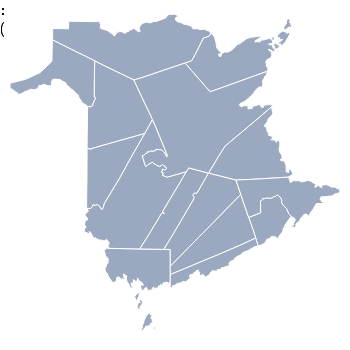
This election study survey is based upon questions asked in the Canadian Election Study, but tailored for the New Brunswick context. It was conducted by the Consortium on Electoral Democracy (C-Dem).